
In 2023, leaders at Crossroads UMC set out to do something simple but radical: listen. Through more than 50 community conversations with teachers, parents, firefighters, nonprofits, and local organizations, a single theme rose above all others—mental health in Loudoun County was in crisis.
Families were waiting six months or more for clinical appointments. Students with suicidal ideation were discharged from hospitals only to discover no follow-up support available. Parents, teachers, and frontline workers described a mounting wave of emotional and psychological struggles with nowhere for people to turn.
The leaders of Crossroads asked the community one question:
“What breaks your heart?”
The response was clear. And it became the spark that lit the vision for Wellness Loudoun.
Now, Wellness Loudoun, a fully formed 501(c)(3) nonprofit is led by Executive Director Jen Marshall and governed by a board chaired by Rev. Tim Ward, Crossroads UMC lead pastor.
Their mission is simple yet ambitious:
To save lives and restore hope by providing a safe, welcoming community for mental, physical, and emotional well-being.
Rather than positioning itself as a replacement for clinical care, Wellness Loudoun acts as a bridge as a way to support people when they are struggling, isolated, or waiting for professional help. For churches and mission-driven organizations wondering how they can respond to the mental-health crisis, Wellness Loudoun’s approach offers a compelling blueprint.
The organization hosts a wide spectrum of offerings that address whole-person wellness. These include:
- Therapeutic art classes
- Financial wellness workshops
- Yoga and physical-wellness activities
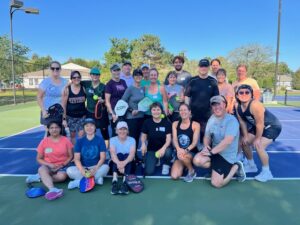
- Pickleball
- Clinician-led webinars and seminars
- In-person clinical counseling
- DBSA (Depression Bipolar Support Alliance) peer-led group
One of Wellness Loudoun’s most innovative programs emerged from the starkest problem they discovered that people in crisis are told to wait for months.
The Bridging the Gap initiative connects individuals facing emotional struggles, crisis moments, job loss, divorce, or any mental-health challenge with a trained community volunteer. Volunteers receive peer-support training and Mental Health First Aid certification, allowing them to safely and compassionately walk alongside participants while they wait for clinical care.
It is not therapy. It is not a substitute for professional help.
It is human connection that is structured, trained, and deeply needed.
The pilot program is already successful, and the team expects significant growth in the next year.
One of the most common questions Crossroads faces is: “Why is a church getting involved in mental health?”
Ward answers this in two ways:
- Because the community asked. The listening campaign revealed a desperate need, and Crossroads refused to look away.
- Because the church has always been in the healing business. Ward shares a moment early in the journey when he looked at a picture of the biblical story of the woman reaching for the cloak of Jesus—a symbol of radical, accessible healing.
In that moment he sensed a calling:
“Crossroads, you have to get into the healing business.”
For generations, the church was at the center of community care. Wellness Loudoun is a step toward reclaiming that legacy, not through preaching or proselytizing, but through service, presence, and compassion.
One of the most surprising developments has been how deeply the broader community has embraced Wellness Loudoun.
More than half of all participants are not affiliated with Crossroads.
This wasn’t accidental. When the church launched a formal Health & Wellness Ministry years earlier, participation came largely from within the congregation. But when the independent nonprofit Wellness Loudoun was formed, community members showed up in droves.
A key insight emerged:
People long for safe, nonjudgmental spaces (even within faith-based environments) when they are not asked to belong before they can be cared for.
Though the physical Wellness Loudoun Center is still in planning stages, the work is already happening throughout the existing church building. Rooms are filled daily with programs, classes, volunteers, and partnerships.
Construction is projected to begin in roughly 12 months, depending on county approvals. But as Ward notes, the lack of a building hasn’t slowed anything down.
The movement has already begun.